
Nobody loses money on a campervan trip because of the daily rate. They lose it on the excess — the four-figure amount buried in the rental contract that becomes very real the moment a stone cracks the windscreen on the Bruce Highway. Read this before you sign anything and you'll know exactly where your money is exposed, and the cheapest way to protect it.
How rental cover actually works
Every hire van comes with basic cover built into the rate. It protects the company's vehicle — but only above an amount you're liable for first. That's the excess, and on campervans and motorhomes in 2026 it typically sits between $3,000 and $7,500.
The maths surprises people. Say your excess is $5,000:
- You reverse into a post, repair costs $1,400 → you pay all $1,400 (it's under the excess).
- Major crash, $25,000 of damage → you pay $5,000, the insurer covers the rest.
Either way, the excess is your worst-case exposure. At pickup the company pre-authorises that amount on your credit card — a hold, not a charge — which is why debit cards are often refused and why you need serious headroom on the card before you even collect the keys.
Two ways to shrink the excess
Option 1: excess reduction at the counter
The rental company offers to drop your excess (sometimes to zero) for a daily fee — typically $25–$55 a day on a campervan in 2026, more on big motorhomes. It's convenient, the company handles claims directly, and there's no out-of-pocket moment. But over a three-week hire that's $500–$1,100, and counter products often still exclude glass, tyres and underbody.
Backpacker-focused companies tend to be more transparent here than the big brands — Travellers Autobarn publishes its excess-reduction tiers up front so you can price the whole hire honestly before you book, rather than getting ambushed at the desk.
Option 2: standalone excess cover
You buy a separate rental-excess policy from a third-party insurer before you travel — usually $8–$15 a day, a fraction of the counter price, and often including the windscreen, tyre and underbody damage the counter product carves out. The trade-off: if something happens, the rental company charges you the excess first and you claim it back afterwards. You need the credit-card headroom to survive that gap.
The counter option sells you convenience; the standalone policy sells you value. If you have $5,000 of headroom on a credit card and three weeks of hire ahead of you, the standalone route usually saves $400 or more on the same trip.
The exclusions that actually catch people
This list is remarkably consistent across the industry. Under base cover — and often under counter excess-reduction too — the following commonly land back on you:
- Windscreen, glass and tyres — the single most frequent claim on Australian highways
- Single-vehicle accidents and rollovers — no other car involved, reduced or no cover
- Underbody and roof damage — including driving a tall van under a low carpark bar
- Unsealed and dirt roads — a huge one; most 2WD rentals void cover the moment you leave bitumen
- Beach driving, sand and water crossings — never covered on a standard van
- Wrong fuel, lost keys, snapped awnings — small, dumb, expensive
- Any unlisted, unlicensed or drinking driver — voids everything
If your route includes any gravel — and in Australia, plenty of free camps and national park roads are gravel — confirm in writing that the vehicle and policy allow it. Otherwise one corrugated kilometre can cost you the full repair bill and void your cover.
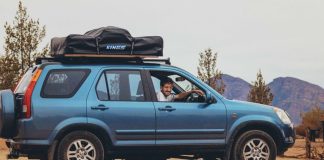
What rental insurance does NOT cover: you and your stuff
This is the gap almost every first-timer misses. Rental cover protects the vehicle. It does nothing for:
- Your gear — a laptop and camera stolen from the van are your problem, not the rental company's
- Your body — ambulance rides (up to $1,300+ uninsured in some states), hospital costs, medical evacuation
- Your trip — cancellations, delays, flights missed because the van died
That's the job of travel insurance. A proper policy built for working-holiday travellers — World Nomads insurance is the long-standing backpacker pick — covers medical, baggage and adventure activities, and some tiers include a rental vehicle excess benefit (often up to $4,000–$5,000) that can double as your standalone excess cover. If your policy includes that benefit at a decent limit, you may not need a separate excess product at all. Check the certificate wording, not the marketing page.
If you own the van instead
Bought a backpacker van for the year? Different structure entirely:
- CTP (compulsory third party) comes with registration in every state and covers injuries to people — never property.
- Third party property (~$300–$500/year) covers damage you do to other cars. The realistic minimum for a $7,000 van.
- Comprehensive (~$800–$1,500+/year for a backpacker on an overseas licence) adds your own vehicle — often not worth it on a cheap van, essential on an expensive one.
- Contents still isn't covered — that's your travel insurance again.
The pickup checklist
- Film a slow walk-around of the van — every scratch, chip and dent, inside and out, timestamped. This is your defence against a disputed bond.
- Get pre-existing damage written on the contract before you drive off.
- Know your excess number and exactly what reduces it.
- Save the roadside-assist number offline — coverage dies between towns.
- Report any incident immediately — to the company, and to police where required. Delays kill claims.
- Keep every receipt if you'll be claiming an excess back from a standalone insurer.
Ten minutes of reading the PDS and one honest decision about the excess is the difference between a bad day and a trip-ending bill. Sort it before the depot, not at it.
gli strumenti che ci piacciono per questo
$45/day all-in, unlimited km, one-way drops between cities.
Covers surf, dive, hike. ~$4/day for a year.