
Mention Tasmania to most backpackers and you get a blank look — they're too busy chasing the sun up the East Coast. Their loss. Tassie packs more variety into a fortnight than states ten times its size: alpine peaks, white-sand bays, a world-class weird art museum, oysters straight from the water, and air so clean they literally bottle it. It's compact, it's stunning, and it's made for a road trip.
Here's a 10-day loop that hits the best of it without leaving you driving all day.
Getting there and getting around
You've got two ways across Bass Strait:
- Fly into Hobart or Launceston (cheap and quick from Melbourne — often under an hour) and hire a vehicle on arrival.
- The Spirit of Tasmania ferry from Geelong to Devonport lets you bring your own van or car. It's a 9–11 hour crossing, often overnight, and it's the move if you're already road-tripping the mainland.
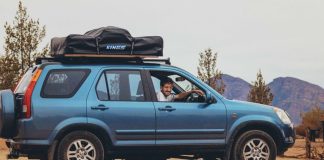
For a fortnight on the island, a campervan is the dream — Tassie has loads of cheap and free camps. Grab one through JUCY Rentals and you've got your bed and transport sorted in one. Distances are short by Australian standards (the whole loop is around 1,000–1,200km), so you're never stuck behind the wheel for long.
Tip: Tasmania is small but the roads are windy and slow. Don't trust the map's straight-line distances — that "1 hour" drive through the mountains is really 90 minutes.
The 10-day loop
Days 1–2: Hobart & MONA
Start in the capital. Hobart is all sandstone warehouses, harbour pubs and Saturday's legendary Salamanca Market (get there before 10am). But the must-do is MONA — the Museum of Old and New Art. Catch the ferry up the Derwent River to a privately owned museum built into a cliff, full of provocative, brilliant, occasionally baffling art. Entry is around $40 and it's worth every cent. Mainland Tasmanians are free; you, sadly, are not.
Day 3: Bruny Island
A short drive and ferry south of Hobart. Bruny is a foodie's wonderland packed into one little island — oysters, cheese, fudge, whisky and a famous berry farm. Walk up to The Neck lookout at dusk to watch little penguins waddle ashore, and if your budget stretches, the wilderness boat cruise along the towering sea cliffs is a genuine highlight.
Days 4–5: Freycinet & Wineglass Bay
Drive up the East Coast (about 2.5 hours) to Freycinet National Park. The Wineglass Bay lookout walk is a 1.5-hour return climb to one of the most photographed views in Australia — a perfect curve of white sand and turquoise water. Keen walkers can push on down to the beach itself. Stay nearby and tackle the Hazards or kayak the bay the next morning.
Days 6–7: Bay of Fires & the north-east
Continue north to the Bay of Fires — orange lichen-covered boulders against white sand and impossibly blue water. The free camping along Binalong Bay is some of the best in the country. From here, cut inland towards Launceston, Tassie's second city and a handy resupply stop with Cataract Gorge right in town.
Days 8–9: Cradle Mountain
Head west into the highlands for the crown jewel of Tasmanian wilderness. Cradle Mountain-Lake St Clair National Park is alpine, dramatic and often moody with cloud. The Dove Lake Circuit (6km, 2–3 hours) loops the lake beneath the jagged peak and is doable for most fitness levels. You'll need a parks pass (a holiday pass is around $46 per vehicle and covers all the national parks above), and a shuttle runs into the main sites. Keep an eye out for wombats grazing at dusk — they're everywhere here.
Day 10: Back to base
Loop back to Devonport for the ferry, or down to Launceston/Hobart for your flight. If you've got an extra hour, swing through Sheffield, the "town of murals," on the way.
Where to sleep
Beyond the van life, Tasmania has a solid hostel scene in Hobart, Launceston and the bigger towns. Lock in your first and last nights through Hostelworld — Hobart fills up fast around market weekends and summer.
What it costs
For a budget backpacker over 10 days:
- Van hire: $45–$80 per day
- Fuel: $250–$400 (the loop is fuel-friendly)
- National parks holiday pass: ~$46 per vehicle
- MONA entry: ~$40
- Campsites: $0–$40 per night (lots of free and low-cost options)
- Food: $30–$50 per day
All up, roughly $1,400–$2,000 per person depending on tours and how often you cook your own meals.
Know before you go
- It gets cold. Even in summer, the highlands and Cradle Mountain can throw rain, wind and single-digit temps at you. Pack layers and a rain jacket year-round.
- Wildlife at night. Wallabies, wombats and Tassie devils cross roads after dark — avoid driving dusk to dawn, or slow right down if you must.
- Book the ferry early. Vehicle spots on the Spirit of Tasmania sell out months ahead in peak season (Dec–Feb).
- Fuel up in towns. Stretches through the wilderness have no servos.
Tasmania is the quiet achiever of Australian travel — smaller, cooler, wilder and far less crowded. Give it ten days and it'll out-punch destinations twice its size.
tools we rate for this
The biggest backpacker hostel inventory in Australia.
Iconic green-and-purple campers, depots in every major city.